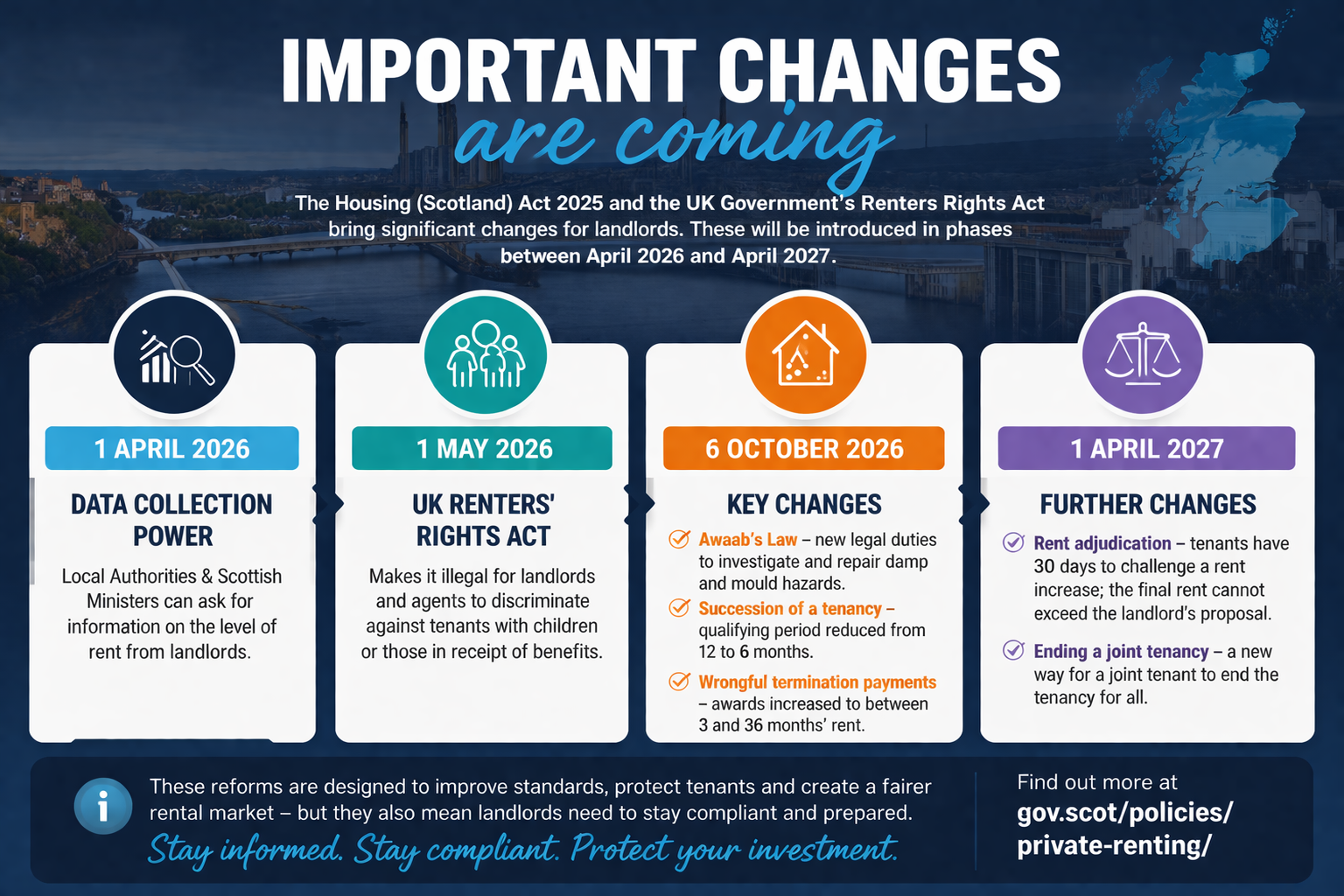
There are some significant changes on the horizon for the private rented sector, with both the Housing (Scotland) Act 2025 and the UK Government’s Renters’ Rights Act introducing new rules that landlords need to be aware of.
These changes will be phased in over the next year, starting from April 2026 and continuing through to April 2027. While some are relatively minor, others will have a real impact on how landlords operate and manage their properties.
Here’s a breakdown of the key changes and what they mean in practice.
1 April 2026 – Data Collection Powers
From April, local authorities and Scottish Ministers will have the power to request information from landlords on rent levels.
In simple terms, this means more oversight and monitoring of rental pricing. While this won’t directly affect day-to-day management, it’s another step towards increased regulation of the sector.
1 May 2026 – Renters’ Rights Act (UK)
This introduces a major change:
It will become illegal for landlords or letting agents to refuse tenants simply because they have children or are in receipt of benefits.
This removes the ability to apply blanket restrictions like “no DSS” or “no families,” and landlords will need to assess applicants on their individual circumstances instead.
6 October 2026 – Key Changes
Awaab’s Law
Landlords will be under stricter legal duties to investigate and deal with damp and mould.
There will be set timescales for:
- Investigating issues
- Carrying out repairs
This raises the bar on property standards and response times, so systems and contractors need to be ready.
Succession of Tenancy
The qualifying period for someone to take over a tenancy after a tenant dies will reduce from 12 months to 6 months.
This makes it easier for someone living in the property to remain there, which could affect how tenancies are managed long term.
Wrongful Termination Payments
Penalties for wrongful termination are increasing significantly.
Tenants could be awarded between 3 and 36 months’ rent if a tribunal finds the tenancy was ended improperly.
This is a big shift and reinforces the need to ensure all notices and grounds for eviction are fully compliant.
1 April 2027 – Further Changes
Rent Adjudication
- Tenants will have 30 days to challenge a proposed rent increase
- Importantly, the rent set by a Rent Officer or Tribunal cannot exceed what the landlord originally proposed
This gives tenants more time and certainty when reviewing rent increases.
Ending a Joint Tenancy
A new mechanism will allow a joint tenant to end the tenancy for all parties.
This could create more movement within tenancies and may require careful handling where multiple tenants are involved.
What This Means for Landlords
Overall, the direction of travel is clear:
- More regulation
- Greater tenant protections
- Higher compliance expectations for landlords
For landlords, this means:
- Ensuring properties are well maintained (especially around damp and mould)
- Being careful and compliant with tenancy terminations
- Adapting to stricter rules around tenant selection
- Expecting increased scrutiny from local authorities
Final Thoughts
While none of these changes are entirely unexpected, they do reinforce the importance of professional management and staying ahead of legislation.
Landlords who are proactive, compliant, and well-advised will continue to perform well. Those who aren’t may find the landscape increasingly difficult to navigate.
If you’re unsure how these changes affect you or your portfolio, now is the time to review your approach and make sure everything is in order ahead of implementation.